Questões de Concurso
Filtrar
1.236 Questões de concurso encontradas
Página 1 de 248
Questões por página:
Questões por página:
Concurso:
Prefeitura de Aracati - CE
Disciplina:
Inglês
mostrar texto associado
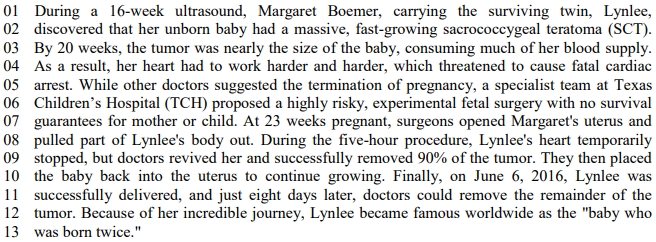
The modal ‘could’ (line11) expresses
Concurso:
Prefeitura de Teotônio Vilela - AL
Disciplina:
Inglês
A teacher is discussing how English can connect an unreal condition in the past with a hypothetical consequence in the present.
Select the sentence that presents a CORRECT mixed conditional and the intended temporal relationship.
Select the sentence that presents a CORRECT mixed conditional and the intended temporal relationship.
Concurso:
Prefeitura de Teotônio Vilela - AL
Disciplina:
Inglês
During a professional conversation, one colleague says:
"I was wondering if you could possibly send me the revised schedule by noon."
A learner interprets the sentence literally as a report about something the speaker was thinking about in the past.
Considering pragmatic meaning in everyday English, select the CORRECT interpretation.
"I was wondering if you could possibly send me the revised schedule by noon."
A learner interprets the sentence literally as a report about something the speaker was thinking about in the past.
Considering pragmatic meaning in everyday English, select the CORRECT interpretation.
Concurso:
Prefeitura de Teotônio Vilela - AL
Disciplina:
Inglês
Formal English allows subject–auxiliary inversion after certain negative or restrictive expressions placed at the beginning of a clause.
Select the CORRECT sentence.
Select the CORRECT sentence.
Concurso:
Prefeitura de Teotônio Vilela - AL
Disciplina:
Inglês
mostrar texto associado
The author uses modal and conditional structures to regulate the degree of certainty attached to different claims and policy possibilities.
Analyze the statements below.
I. In "One might have expected that increased female participation [...] would have seen more mobility", might have expected retrospectively presents an expectation without asserting that the expected result occurred.
II. In "if they feel assured that they can hang on to workers", the if-clause presents an open condition rather than a counterfactual past situation.
III. In "State governments could make it easier for people to move", could primarily expresses an unrealised ability possessed by governments at a specific moment in the past.
It is CORRECT to state that:
